
Chrome Ore Beneficiation
Chromite is dense and weakly magnetic, so gravity does most of the work. The difficulty is usually not separation but keeping the fine fraction out of the tailings and controlling the chromium-to-iron ratio.
Ore types
Ore types and their main characteristics
The mineralogy of the feed decides which separation methods are even applicable. These are the categories we see on this ore type.
Stratiform chromitite
Large, consistent seams. Typically graded by crushing and screening, with gravity on the fines.
Podiform chromite
Irregular ore bodies with variable grade and lump size. Metal accounting is harder and pre-concentration helps.
Chromite sands and fines
Fine-grained material where gravity separation efficiency drops off sharply below a certain size.
Serpentine-rich ore
High gangue content; requires more grinding and produces more slimes.
Challenges
Where this ore becomes difficult
These are the recurring technical problems that separate a workable flowsheet from a catalogue of machines.
- Chromite fines reporting to tailings because gravity recovery becomes inefficient at fine sizes.
- Chromium-to-iron ratio control: some gangue minerals carry iron and lower the effective Cr:Fe ratio of the concentrate.
- Slime generation during grinding, which both loses chromite and disturbs dewatering.
- Lumpy vs fine product specifications: metallurgical and refractory markets accept very different size and grade windows.
- Over-grinding of already liberated ore, needlessly creating fines that cannot be recovered.
Techniques
Applicable separation techniques
Each technique below is selected against a specific mineral property, not as a generic step.
Gravity concentration (jig)
Coarse and medium chromite recovery. Jigs handle relatively wide size ranges effectively.
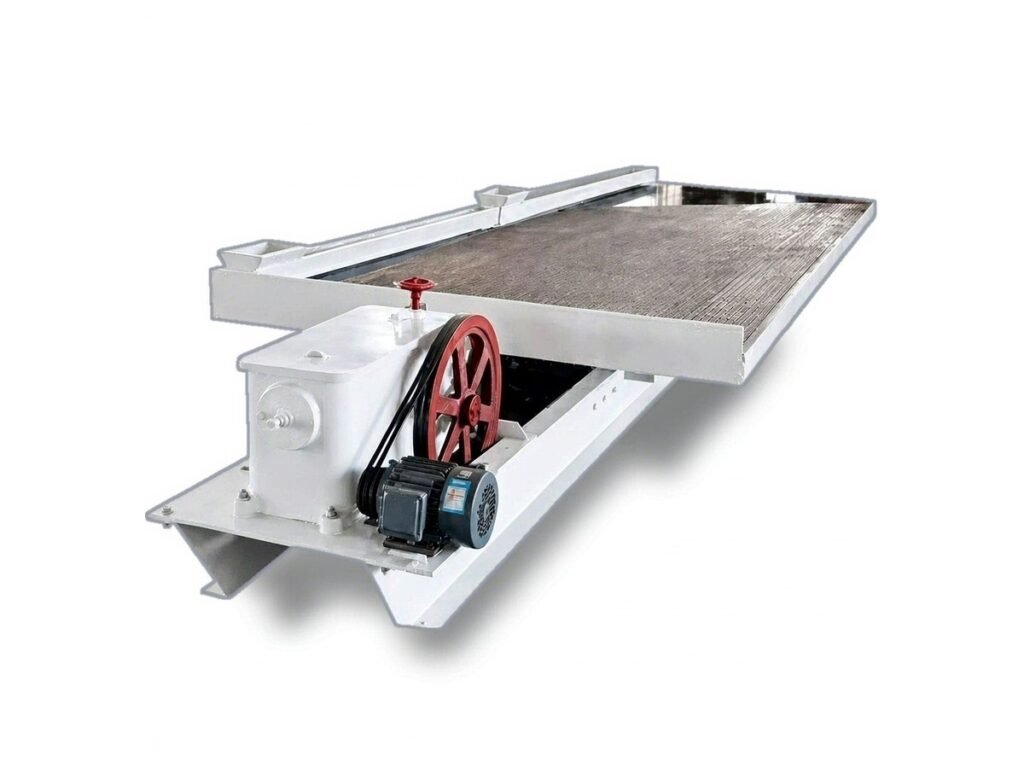
Gravity concentration (shaking table)
Cleaning and fine gravity duty; produces the highest-grade gravity concentrate.
Spiral concentration
Bulk roughing on fine fractions, low operating cost but lower upgrading ratio.
High-intensity magnetic separation
Chromite is weakly magnetic; magnetic separation is used to clean gravity concentrate or treat fine fractions.
Classification and slimes treatment
Hydraulic classification and fine screening to keep fine chromite in circuit rather than losing it to tailings.
Flowsheet
Process routes
Where an ore type splits into genuinely different routes, they are shown separately rather than forced into one diagram.
Lumpy chromite — crush and screen
Coarse, well-liberated ore for metallurgical or refractory use- STEP 1CrushingJaw and cone, staged
- STEP 2ScreeningSplit into saleable lump and fines
- STEP 3Fines gravityJig or table on the undersize
- STEP 4DewateringProduct dewatering and stockpiling
Fine chromite — grinding and gravity
Fine dissemination requiring liberation- STEP 1CrushingTo fine crushing stage
- STEP 2GrindingRod or ball mill, limiting over-grinding
- STEP 3ClassificationClose control of the fine fraction
- STEP 4GravitySpiral roughing then table cleaning
- STEP 5Magnetic cleaningRemove iron-bearing gangue if required
Equipment
Equipment used in this flowsheet
Each item links to its own page with models, capacity ranges and specifications.
Selection notes
What to check before you specify
These are the points that most often change a flowsheet after testing — worth settling before equipment is ordered.
- Define the target market first. Metallurgical-grade and refractory-grade chrome require different size distributions and Cr:Fe ratios.
- Over-grinding is the most common cause of chromite loss. Prefer staged crushing and rod milling where liberation permits.
- Plan the fine-fraction recovery circuit at design stage; retrofitting slimes recovery is usually expensive and space-constrained.
- Assess the Cr:Fe ratio of both ore and concentrate — a high-grade concentrate can still be rejected if the ratio is wrong.
Knowledge
Related technical notes
Written against this ore type. Articles are published only after technical review.
Chromite gravity circuits: coarse to fine
How jig, spiral and table duties are arranged and why they are not interchangeable.
Article in preparation — pending technical review
Controlling the Cr:Fe ratio
Gangue mineralogy and what it means for concentrate acceptance.
Article in preparation — pending technical review
Slimes: the hidden loss in gravity plants
Classification, dewatering and where chromite disappears from the circuit.
Article in preparation — pending technical review
FAQ
Frequently asked questions
Is magnetic separation the main method for chromite?
No. Chromite is only weakly magnetic. Gravity is the primary method; magnetic separation is normally a cleaning or auxiliary step.
Why is fine chromite hard to recover?
Gravity separation efficiency falls sharply as particle size decreases, and fine chromite also tends to be lost with slimes during classification and dewatering.
Can the plant produce several product grades at once?
Yes. Staged crushing and screening commonly produce lump, chip and fines products for different markets. The configuration depends on your target specifications.
Does chrome ore need flotation?
Generally no for chromite itself. Flotation is used in some complex ores to remove sulphide or silicate gangue, but it is not the standard route.
Discuss your chrome ore project
Tell us the ore type, the target product and the capacity you have in mind. We will reply with a process proposal and an equipment list for that specific material — not a generic catalogue selection.