
Gold Ore Processing
Hard-rock and placer gold follow two different flowsheets. The first question is never "which machine" — it is whether the gold is free-milling, locked in sulphides, or already liberated as placer concentrate.
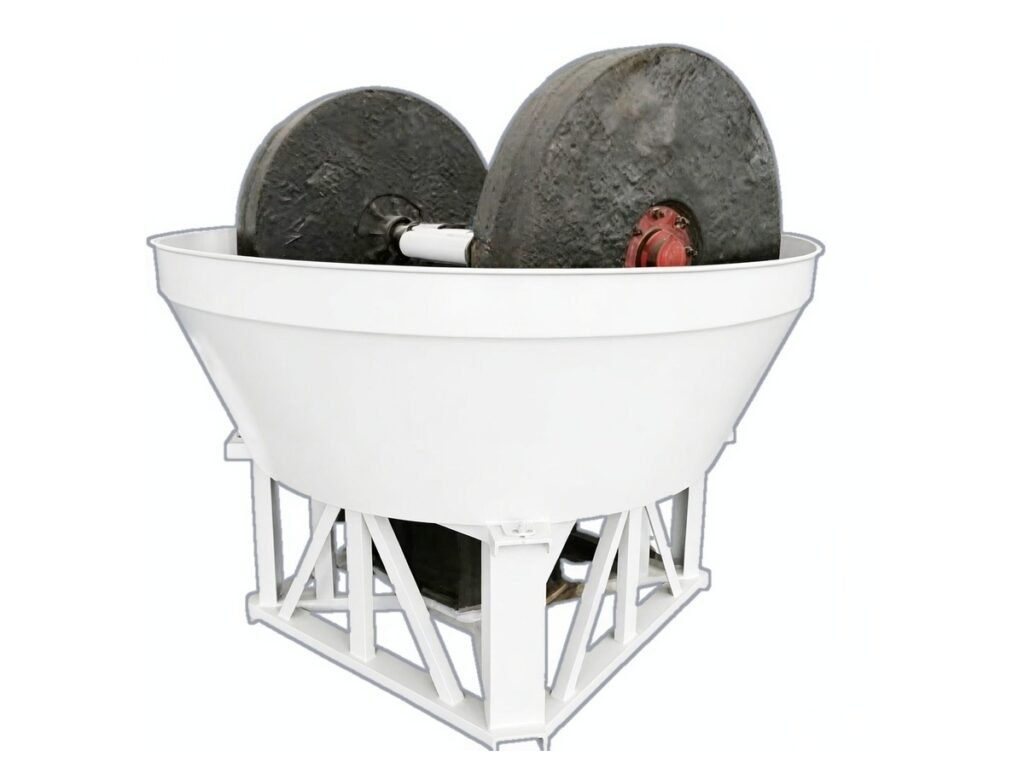
Ore types
Ore types and their main characteristics
The mineralogy of the feed decides which separation methods are even applicable. These are the categories we see on this ore type.
Quartz vein (lode) gold
Gold hosted in quartz veins with low sulphide content. Often free-milling after fine grinding; gravity recovery is usually effective.
Sulphide-hosted gold
Gold locked in pyrite, arsenopyrite or pyrrhotite. Requires fine liberation, and often flotation to a concentrate before further treatment.
Oxidised gold ore
Near-surface weathered ore with low sulphide. Usually easier to leach, but clay content can disturb filtration and settling.
Placer / alluvial gold
Already liberated by natural weathering. Separation is by density, not by comminution — wash, screen and gravity concentrate.
Tailings and old dumps
Re-processing of previously milled material. Grade is low and the material is already ground, so the flowsheet differs again.
Challenges
Where this ore becomes difficult
These are the recurring technical problems that separate a workable flowsheet from a catalogue of machines.
- Very fine gold locked inside sulphide grains — gravity alone will not recover it, and recovery depends on the liberation size from grinding.
- Carbonaceous ore preg-robbing in leach circuits: gold is adsorbed by organic carbon and never reaches the loading stage.
- Clay-rich oxidised ore causing poor settling, high reagent consumption and unstable thickener operation.
- Placer feed with heavy clay that blinds screens and traps gold in clay lumps unless washing is properly designed.
- Over-grinding in placer or coarse-gold circuits: flattening and losses of free gold to slimes.
Techniques
Applicable separation techniques
Each technique below is selected against a specific mineral property, not as a generic step.
Gravity concentration
Recovers free gold by density difference. Knelson-type centrifugal concentrators, jigs, shaking tables and spiral chutes. Standard practice as a first-stage recovery ahead of flotation or leaching.
Flotation
Concentrates sulphide-hosted gold into a small high-grade stream. Gold reporting with pyrite or arsenopyrite is recovered, then treated by roasting, pressure oxidation or fine grinding.
Cyanide leaching (CIL / CIP)
Dissolution of gold into solution and recovery onto activated carbon. Selection between CIL and CIP depends on preg-robbing behaviour and carbon management.
Gravity + flotation hybrid
Common on lode gold: gravity recovers coarse free gold early, flotation handles the sulphide-locked fraction.
Washing and screening (placer)
Trommel or scrubber to break clay, then sluices, jigs and shaking tables for concentrate upgrading.
Flowsheet
Process routes
Where an ore type splits into genuinely different routes, they are shown separately rather than forced into one diagram.
Lode gold — gravity + flotation
Free-milling to moderately refractory vein ore- STEP 1CrushingJaw + cone, to mill feed size
- STEP 2GrindingBall or rod mill, with a gravity unit in the circulating load
- STEP 3GravityRecover coarse free gold early
- STEP 4FlotationSulphide concentrate carrying finer gold
- STEP 5DewateringConcentrate thickening and filtration
Placer gold — washing + gravity
Alluvial or eluvial feed, gold already liberated- STEP 1WashingScrubber or trommel to break clay
- STEP 2ScreeningRemove oversize and classify
- STEP 3Rougher gravitySluice or jig for bulk concentrate
- STEP 4CleaningShaking table for final concentrate
Equipment
Equipment used in this flowsheet
Each item links to its own page with models, capacity ranges and specifications.
Selection notes
What to check before you specify
These are the points that most often change a flowsheet after testing — worth settling before equipment is ordered.
- Do not size a gravity circuit before knowing the gold particle-size distribution in the ground ore. Liberation size drives the whole flowsheet.
- Test for preg-robbing and organic carbon before assuming a cyanidation route is viable.
- Placer and lode ore must never be quoted from the same template — throughput, washing and water balance differ entirely.
- For refractory sulphide ore, the recovery of a flotation concentrate is not the end of the flow; downstream oxidation or roasting capacity decides the economics.
Knowledge
Related technical notes
Written against this ore type. Articles are published only after technical review.
Gold in sulphide versus free-milling ore
How mineralogy changes the flowsheet, and why the same "gold plant" label can hide two different designs.
Article in preparation — pending technical review
Choosing between CIL and CIP
The role of preg-robbing, carbon management and circuit simplicity.
Article in preparation — pending technical review
Gravity recovery: where in the circuit it belongs
Placement in the circulating load versus ahead of flotation.
Article in preparation — pending technical review
FAQ
Frequently asked questions
Can placer gold and hard-rock gold use the same production line?
No. Placer gold is already liberated and needs washing, screening and gravity. Hard-rock gold must be crushed and ground to liberation before any concentration step. The equipment lists only partially overlap.
Is gravity alone enough for gold recovery?
Only when a significant share of gold is coarse and free. Where gold is locked in sulphides or very fine, gravity recovers a fraction and the rest requires flotation or leaching. A gravity-only quotation should be treated with caution.
What determines whether flotation is needed?
The share of gold associated with sulphides. If a large part of the gold is hosted in pyrite or arsenopyrite, a sulphide concentrate is the practical way to upgrade before further treatment.
Can you quote a recovery rate in advance?
Not without testwork. Recovery depends on liberation size, mineralogy and the presence of carbon or clay. We quote equipment duty, and confirm achievable recovery through bench or pilot testing.
Discuss your gold ore project
Tell us the ore type, the target product and the capacity you have in mind. We will reply with a process proposal and an equipment list for that specific material — not a generic catalogue selection.