
Silica Sand Processing
Silica sand is a purity problem, not a concentration problem. The work is removing iron, clay and heavy minerals, then grading to the size distribution the customer specifies.
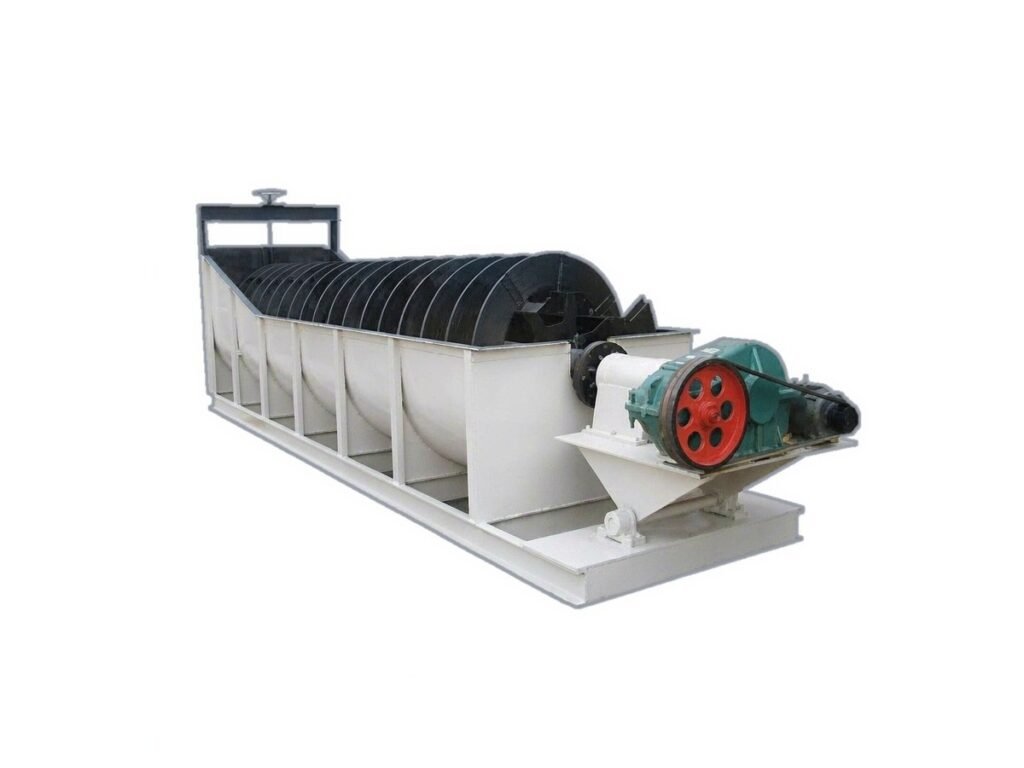
Ore types
Ore types and their main characteristics
The mineralogy of the feed decides which separation methods are even applicable. These are the categories we see on this ore type.
Natural silica sand
Deposited sand with relatively low impurity. Washing, classification and magnetic separation are often sufficient.
Quartz sandstone
Consolidated rock requiring crushing and grinding before upgrading; more fines are generated.
Quartz vein / pegmatite
High-purity quartz source, but requires crushing and careful iron control during processing.
Iron-stained sand
Iron oxide coatings on grain surfaces. Needs attrition scrubbing, and sometimes acid treatment, not just washing.
Heavy-mineral-bearing sand
Contains ilmenite, rutile or zircon; magnetic and gravity separation are required to remove them.
Challenges
Where this ore becomes difficult
These are the recurring technical problems that separate a workable flowsheet from a catalogue of machines.
- Iron removal: surface coatings and iron-bearing heavy minerals both affect the final Fe₂O₃ figure, but they need different treatment.
- Clay and silt that survives simple washing and must be removed by attrition scrubbing.
- Feldspar and mica content requiring flotation where high-purity glass sand is the target.
- Size distribution — a chemically suitable sand can still be rejected if the grading does not match the customer specification.
- Product moisture and dewatering, since silica sand is shipped dry for most industrial uses.
Techniques
Applicable separation techniques
Each technique below is selected against a specific mineral property, not as a generic step.
Washing and classification
Removes clay and controls the size distribution. The first and always necessary step.
Attrition scrubbing
Mechanical surface cleaning to remove iron coatings from grain surfaces; far more effective than washing alone for stained sand.
Magnetic separation
Removes iron-bearing heavy minerals. High-intensity magnetic separation is used on the fine fractions.
Flotation
Removes feldspar and mica for high-purity grades; also used to float heavy minerals.
Gravity separation
Heavy mineral removal where the density contrast is large enough.
Acid leaching
Applied for very low iron specifications; requires appropriate materials and effluent handling.
Flowsheet
Process routes
Where an ore type splits into genuinely different routes, they are shown separately rather than forced into one diagram.
Washed sand — glass and foundry grade
Relatively clean natural sand- STEP 1WashingBreak clay, remove fines
- STEP 2ClassificationControl the size distribution
- STEP 3Attrition scrubbingRemove surface iron coatings
- STEP 4Magnetic separationRemove iron-bearing minerals
- STEP 5DewateringProduct dewatering and drying
High-purity sand — flotation route
Feldspar and mica content above specification- STEP 1Crushing and grindingRock source liberation
- STEP 2Washing and classificationRemove clay and size the pulp
- STEP 3Attrition scrubbingSurface cleaning
- STEP 4FlotationRemove feldspar and mica
- STEP 5Magnetic separationFinal iron removal
- STEP 6Filtration and dryingProduct preparation
Equipment
Equipment used in this flowsheet
Each item links to its own page with models, capacity ranges and specifications.
Selection notes
What to check before you specify
These are the points that most often change a flowsheet after testing — worth settling before equipment is ordered.
- Ask the customer for the full specification before designing: Fe₂O₃, Al₂O₃, size distribution and moisture. A sand that meets one grade can fail another.
- Distinguish surface iron staining from iron-bearing heavy minerals. The first responds to scrubbing, the second to magnetic separation.
- Washing alone does not fix coated grains; attrition scrubbing is often the missing step.
- Recover fines with a fine sand recovery unit — the fine fraction is often a saleable product rather than waste.
Knowledge
Related technical notes
Written against this ore type. Articles are published only after technical review.
Iron in silica sand: coatings versus minerals
Two different problems that need two different treatment steps.
Article in preparation — pending technical review
Attrition scrubbing explained
What it does mechanically and where it belongs in the circuit.
Article in preparation — pending technical review
Glass sand versus foundry sand
How the specification window changes the flowsheet.
Article in preparation — pending technical review
FAQ
Frequently asked questions
Why does silica sand need attrition scrubbing?
Iron oxide coatings adhere to grain surfaces and simple washing does not detach them. Attrition scrubbing provides mechanical surface cleaning, which is what actually reduces the coated-iron contribution.
Can magnetic separation alone reach a low iron specification?
It removes iron-bearing minerals but not surface coatings. Most low-iron flowsheets combine scrubbing and magnetic separation, and sometimes flotation or leaching.
How is the size distribution controlled?
By classification and screening — hydrocyclones, high-frequency screens and vibrating screens. Cyclone cut points and screen aperture are selected against the customer specification.
Is acid leaching always required for high purity?
No. It is used where the iron specification is very low and where washing, scrubbing and magnetic separation have reached their limit. It brings additional material-handling and effluent requirements.
Discuss your silica sand project
Tell us the ore type, the target product and the capacity you have in mind. We will reply with a process proposal and an equipment list for that specific material — not a generic catalogue selection.