
Copper Ore Processing
Sulphide copper and oxide copper are treated by completely different processes. Sulphides are concentrated by flotation; oxides usually cannot be floated economically and go to leaching, solvent extraction and electrowinning.
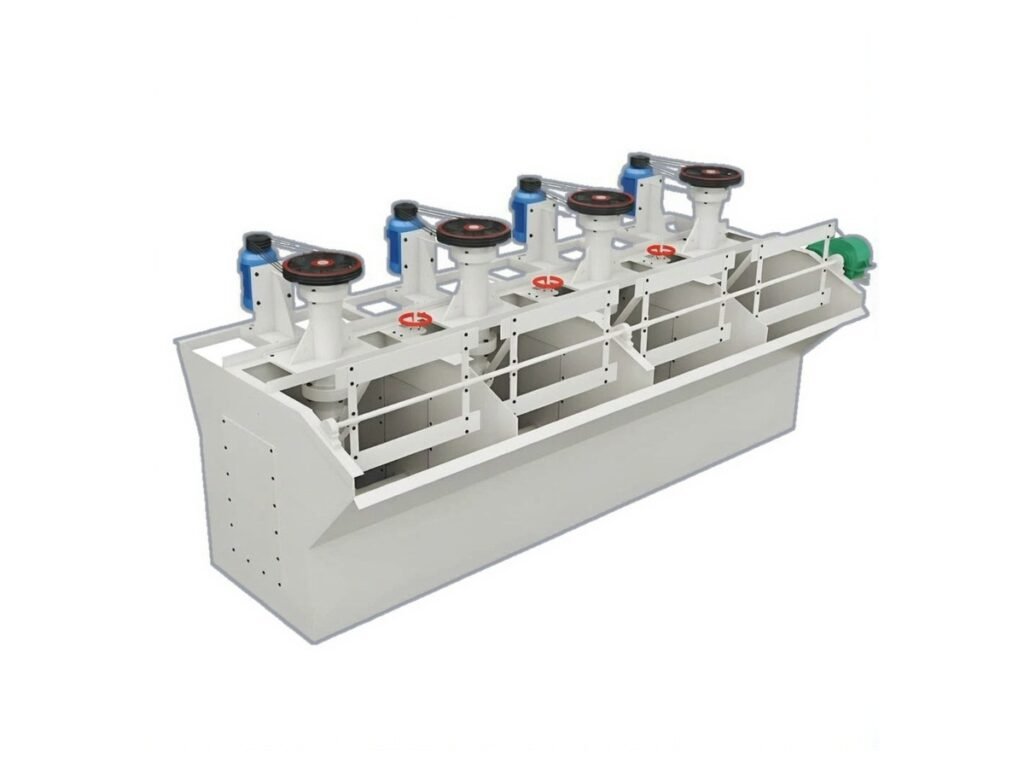
Ore types
Ore types and their main characteristics
The mineralogy of the feed decides which separation methods are even applicable. These are the categories we see on this ore type.
Chalcopyrite (CuFeS₂)
The most common copper mineral. Well suited to flotation, with gold and silver often reporting to the concentrate.
Chalcocite and bornite
High-copper sulphides. Float readily; ore with high chalcocite can be treated by either flotation or leaching.
Oxide copper (malachite, azurite)
Copper carbonates and silicates. Poor flotation response in practice — leaching is the usual route.
Mixed sulphide–oxide ore
Requires a split flowsheet, or sequential treatment, depending on the sulphide-to-oxide ratio.
Secondary copper minerals (chrysocolla, cuprite)
Notoriously difficult in flotation, and often problematic in leaching due to acid consumption and slime formation.
Challenges
Where this ore becomes difficult
These are the recurring technical problems that separate a workable flowsheet from a catalogue of machines.
- Oxide copper minerals that do not respond to collectors under normal sulphide flotation conditions.
- Complex sulphide ores with pyrite: depressing pyrite while floating copper and keeping the concentrate grade requires careful reagent control.
- Fine-grained intergrowth requiring regrinding of rougher concentrate to reach liberation.
- Oxide and mixed ores consuming large amounts of acid and generating slimes during heap or agitation leaching.
- Talc and clay minerals causing froth instability and entrainment of gangue into concentrate.
Techniques
Applicable separation techniques
Each technique below is selected against a specific mineral property, not as a generic step.
Flotation
Rougher–scavenger–cleaner circuit with regrinding. The standard for sulphide copper; also recovers associated gold and silver into the concentrate.
Bulk flotation then separation
For copper–lead or copper–zinc ores: float a bulk concentrate then separate under depressed conditions.
Heap or agitation leaching
Applied to oxide copper, and increasingly to low-grade sulphides. Sulphuric acid system, with SX–EW to produce cathode.
Stirred tank leaching
For higher-grade oxide or concentrate feed where heap leaching is not suitable.
Gravity / dense media pre-concentration
Occasionally used to reject coarse barren material ahead of the main circuit.
Flowsheet
Process routes
Where an ore type splits into genuinely different routes, they are shown separately rather than forced into one diagram.
Sulphide copper — flotation
Chalcopyrite or other base-metal sulphides- STEP 1CrushingJaw + cone to mill feed
- STEP 2GrindingBall mill with classification
- STEP 3Rougher / scavengerBulk sulphide flotation
- STEP 4Regrindingliberate locked particles in the rougher concentrate
- STEP 5CleanerUpgrade to saleable concentrate grade
- STEP 6DewateringThickening and filtration
Oxide copper — leach and SX–EW
Copper carbonates and silicates, low sulphide content- STEP 1CrushingFeed preparation, agglomeration where needed
- STEP 2LeachingHeap or tank leaching
- STEP 3Solvent extractionSelective transfer of copper into electrolyte
- STEP 4ElectrowinningCopper cathode production
Equipment
Equipment used in this flowsheet
Each item links to its own page with models, capacity ranges and specifications.
Selection notes
What to check before you specify
These are the points that most often change a flowsheet after testing — worth settling before equipment is ordered.
- Identify the oxide-to-sulphide ratio first. It decides whether the project is a flotation plant, a leach plant, or both.
- Do not size a flotation circuit on oxide ore and expect sulphide performance; recoveries and reagent schemes differ completely.
- For mixed ores, decide early whether to treat separately by campaign or to install a combined flowsheet — retrofitting later is expensive.
- Concentrate grade targets should be agreed with the offtaker before the cleaner circuit is designed; smelter penalties depend on penalty elements.
Knowledge
Related technical notes
Written against this ore type. Articles are published only after technical review.
Sulphide and oxide copper: two process routes
Why the ore mineralogy, not the grade, decides the plant configuration.
Article in preparation — pending technical review
Pyrite depression in copper flotation
Reagent strategy and circuit design for cleaner concentrates.
Article in preparation — pending technical review
Regrinding rougher concentrate
When a single grind cannot reach liberation for both recovery and grade.
Article in preparation — pending technical review
FAQ
Frequently asked questions
Why cannot oxide copper be floated like sulphide?
The mineral surfaces of copper oxides do not respond reliably to sulphide collectors, and the minerals dissolve in the pulp instead. Oxide ore is normally leached, not floated.
What is the difference between CIL and SX–EW?
CIL is a gold circuit using carbon. Copper oxide ore uses sulphuric acid leaching followed by solvent extraction and electrowinning. They are different processes for different metals.
Can a copper plant also recover gold and silver?
Frequently yes, because gold and silver report with the copper sulphide concentrate and are paid for at the smelter. The amount recoverable depends on mineralogy and is confirmed by assay and testwork.
How do I know whether my ore is sulphide or oxide?
By mineralogical analysis and acid consumption testing. Appearance alone is not reliable — a diagnostic leach test and mineralogy report settle it.
Discuss your copper ore project
Tell us the ore type, the target product and the capacity you have in mind. We will reply with a process proposal and an equipment list for that specific material — not a generic catalogue selection.