
Tin Ore Processing
Cassiterite is dense but brittle. The engineering problem is not separation — it is liberating the tin without grinding it into slimes that gravity can no longer recover.
Ore types
Ore types and their main characteristics
The mineralogy of the feed decides which separation methods are even applicable. These are the categories we see on this ore type.
Vein (primary) tin
Cassiterite in quartz or greisen. Requires fine crushing and grinding to liberate, with a strong risk of over-grinding.
Placer / alluvial tin
Already liberated. Washing, screening and gravity, with sluice and jig concentration.
Tin with sulphides
Cassiterite associated with pyrite, arsenopyrite or chalcopyrite. Sulfide flotation or gravity pre-concentration needed before tin gravity.
Skarn and complex tin ores
Fine-grained intergrowth of cassiterite with iron and silicate minerals; the most difficult category.
Challenges
Where this ore becomes difficult
These are the recurring technical problems that separate a workable flowsheet from a catalogue of machines.
- Cassiterite is brittle: over-grinding produces slimes that are effectively lost in conventional gravity circuits.
- Sulphide minerals interfering with gravity concentration and contaminating the tin concentrate.
- Iron oxide coatings on cassiterite particles reducing surface-based separation efficiency.
- Very fine cassiterite requiring alternative techniques where gravity recovery fails.
- Complex flowsheets where tin is a by-product alongside tungsten, copper or fluorite.
Techniques
Applicable separation techniques
Each technique below is selected against a specific mineral property, not as a generic step.
Gravity concentration
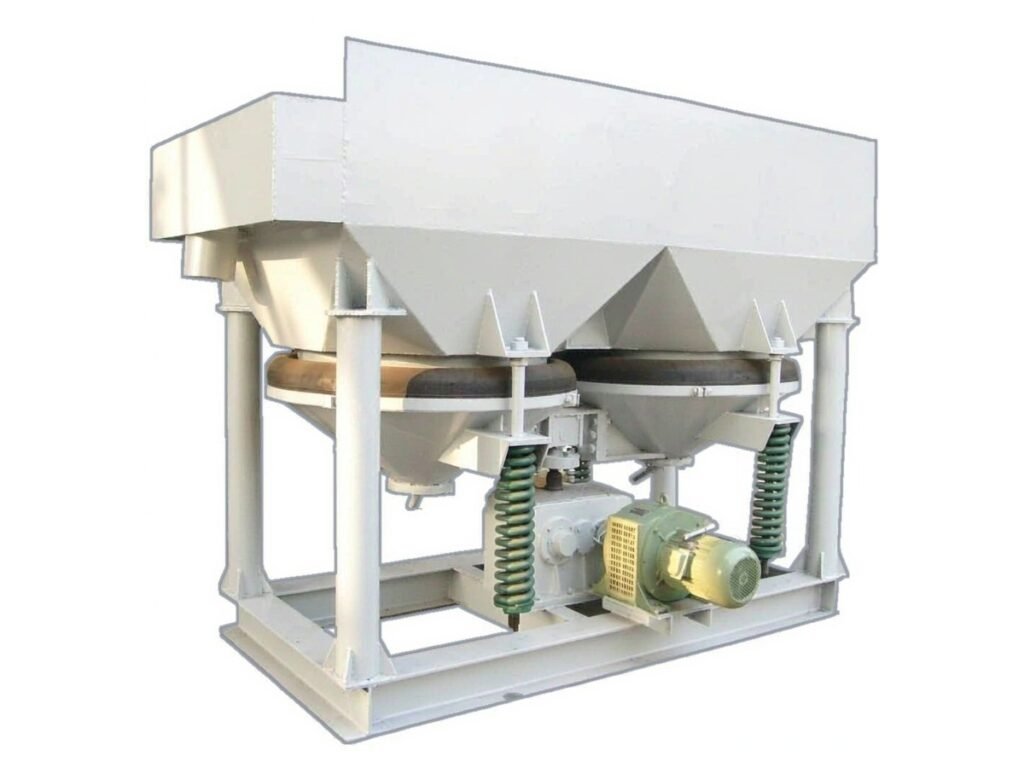
The primary method for cassiterite, applied in stages: jig for coarse, spiral for medium, shaking table for fine and cleaning.
Stage grinding with gravity
Liberate in stages and recover coarse tin early, so less material is over-ground. Standard practice for vein tin.
Sulphide flotation
Remove sulphide minerals ahead of or after gravity, to protect concentrate quality.
Magnetic and electrostatic separation
Remove iron minerals and other heavy gangue from the gravity concentrate.
Slimes treatment
Where fine cassiterite is significant, additional gravity or centrifugal units may be needed — the applicable method needs testwork confirmation.
Flowsheet
Process routes
Where an ore type splits into genuinely different routes, they are shown separately rather than forced into one diagram.
Vein tin — staged crushing, grinding and gravity
Primary cassiterite ore in quartz gangue- STEP 1CrushingJaw and roll crusher — avoid impact over-reduction
- STEP 2Stage grindingRod mill with early gravity recovery
- STEP 3Coarse gravityJig for the coarse fraction
- STEP 4Fine gravitySpiral and shaking table
- STEP 5Sulphide removalFlotation where sulphides are present
- STEP 6Concentrate cleaningMagnetic separation and retabling
Placer tin — washing and gravity
Alluvial cassiterite, already liberated- STEP 1WashingScrubber to break up clay
- STEP 2ScreeningReject oversize
- STEP 3Rougher gravitySluice or jig
- STEP 4CleaningShaking table for final concentrate
Equipment
Equipment used in this flowsheet
Each item links to its own page with models, capacity ranges and specifications.
Selection notes
What to check before you specify
These are the points that most often change a flowsheet after testing — worth settling before equipment is ordered.
- Avoid impact crushers on tin ore where possible; the brittle cassiterite shatters into slimes faster than the gangue.
- Design for staged liberation with early gravity recovery rather than a single fine grind — the slimes penalty is permanent.
- Evaluate the slimes fraction explicitly. If a meaningful share of tin reports below the effective gravity size, the selected flowsheet must address it.
- For tin with sulphides, decide the order of removal (pre-flotation vs post-gravity) based on the mineralogy report, not by default.
Knowledge
Related technical notes
Written against this ore type. Articles are published only after technical review.
Slime control in tin gravity circuits
Why staged grinding and early recovery matter more than adding equipment.
Article in preparation — pending technical review
Tin and tungsten: a shared circuit?
Where the flowsheets overlap and where they must separate.
Article in preparation — pending technical review
Sulphide removal before gravity
The trade-offs between pre-flotation and concentrate cleaning.
Article in preparation — pending technical review
FAQ
Frequently asked questions
Why is tin often described as a gravity-only mineral?
Because cassiterite is dense and gravity is the primary method. But liberation and slime control determine the actual recovery — a gravity circuit that over-grinds will still lose tin.
Can a ball mill be used for tin grinding?
It can, but the higher impact action tends to produce more fines. Rod mills and roll crushers are frequently preferred where the flowsheet needs to protect coarse cassiterite.
How is tin separated from sulphides?
By flotation — before gravity to remove sulphides from the feed, or on the gravity concentrate to clean it. The choice depends on the ore mineralogy.
What if the tin is very fine?
Conventional gravity efficiency drops below a certain particle size. Additional options exist but their suitability must be confirmed by testwork; we do not specify fine-tin recovery equipment without it.
Discuss your tin ore project
Tell us the ore type, the target product and the capacity you have in mind. We will reply with a process proposal and an equipment list for that specific material — not a generic catalogue selection.