
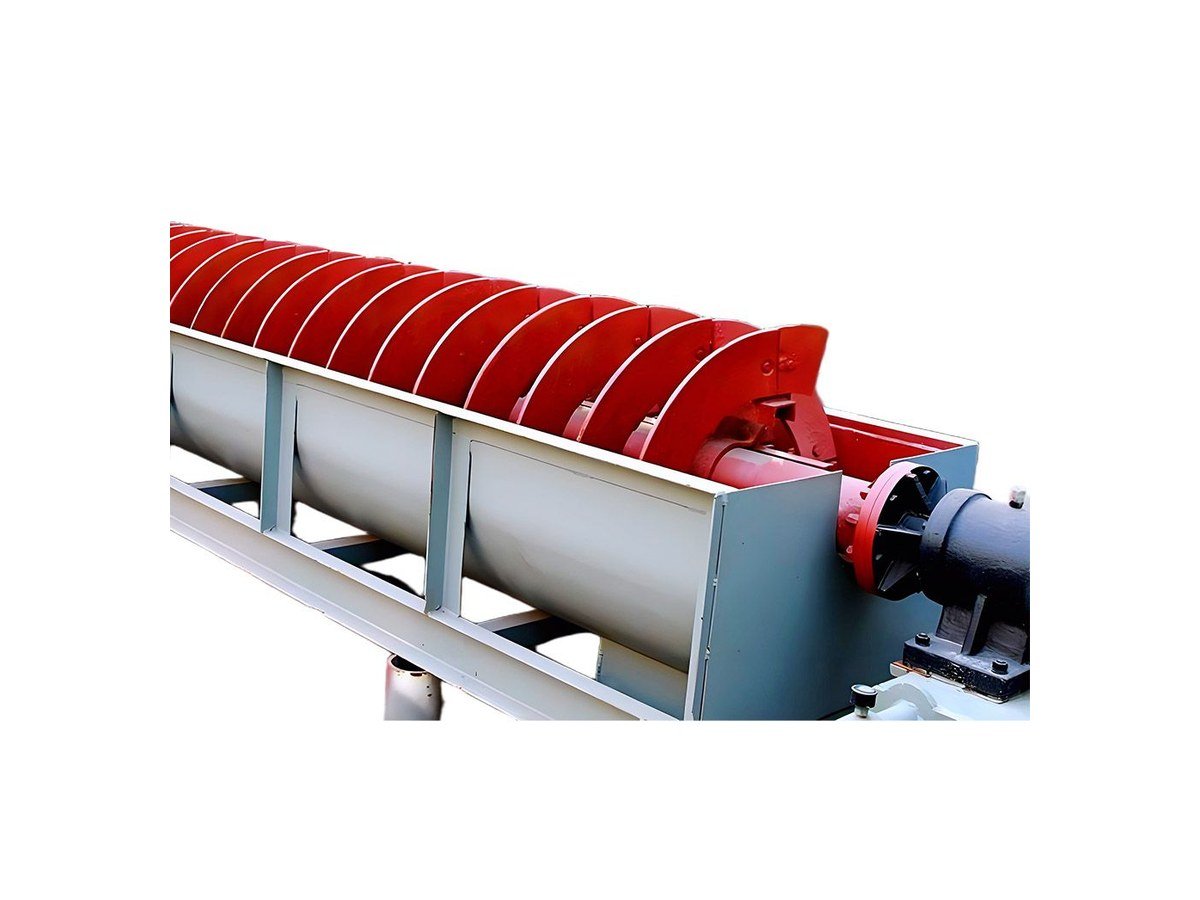
Spiral Sand Washer
XL Series
A screw in a trough agitates and conveys the sand, washing out clay and fines while dewatering and lifting the product. Compared with a wheel washer, the spiral type handles higher tonnage and dirtier feed, at the cost of losing more fine sand — which is why it is normally paired with a fine sand recovery unit.
- Screw agitation plus water washing tolerates high clay content
- High throughput — 20–180 t/h on a single unit
- Low moisture in the washed sand, so it can be stockpiled or fed onward
Key features
- Screw agitation plus water washing tolerates high clay content
- High throughput — 20–180 t/h on a single unit
- Low moisture in the washed sand, so it can be stockpiled or fed onward
- Replaceable screw flights and trough liners keep maintenance simple
- Twin-screw models for high capacity and dirty feed
- Pair with a fine sand recovery unit to capture the fines in the overflow
Specifications
XL Series Spiral Sand Washer
| Model | Screw Diameter (mm) | Capacity (t/h) | Power (kW) |
|---|---|---|---|
| XL-508 | 508 | 20–30 | 5.5 |
| XL-610 | 610 | 40–50 | 7.5 |
| XL-762 | 762 | 60–80 | 11 |
| XL-914 | 914 | 100–120 | 15 |
| XL-1118 | 1118 | 150–180 | 18.5 |
Selection note:Standard XL figures. Capacity varies with clay content and the cleanliness required. For dirty feed choose one size up and add a fine sand recovery unit to limit fines loss.
Applications
- Washing natural and manufactured sand
- Cleaning high-clay aggregate
- Desliming tailings and mineral sands
- Glass and foundry sand preparation
Options & configuration
- Single or twin screw
- Screw diameter selected by capacity
- Wear liners on trough and flights
- Optional fine sand recovery unit and dewatering screen
- Water recirculation to cut fresh water demand
Need help choosing a model?
Tell us the material and the target capacity — we will recommend the model and the supporting equipment that fit.