
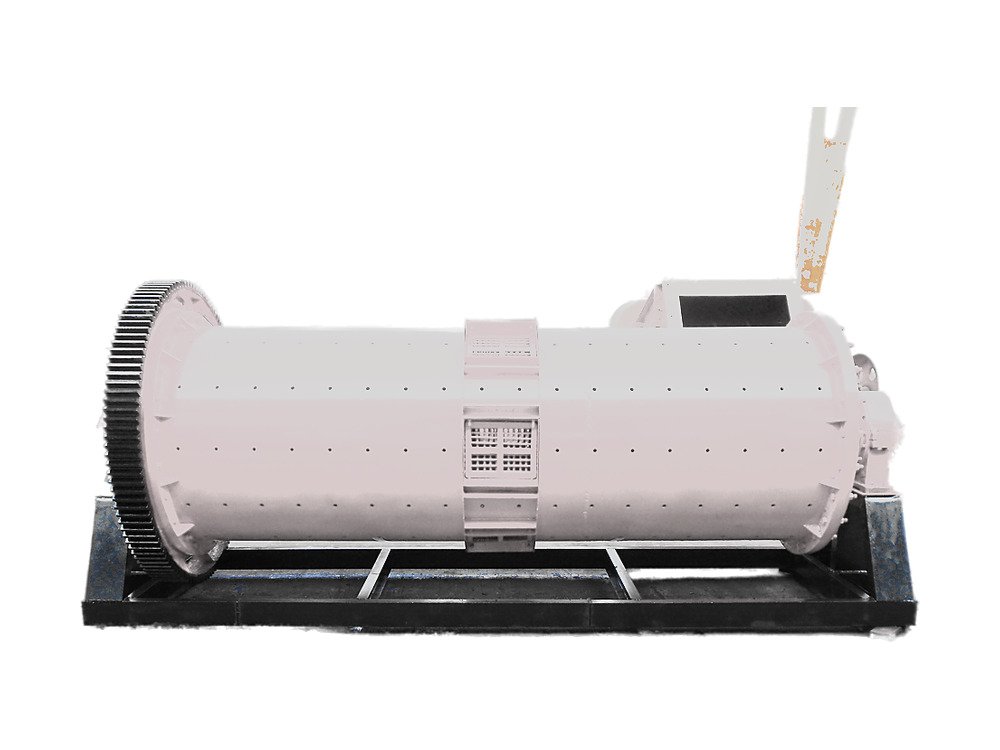
Rod Mill
MBY / MBS Series
A mill that grinds with steel rods instead of balls. The line contact between rod and ore produces a narrower size distribution and far less slime — which is why rod mills dominate gravity recovery circuits and sand shaping, and why a ball mill in the same position will cost you recovery.
- Line contact grinding — uniform product, minimal over-grinding of the coarse end
- Selective grinding protects the liberated heavy minerals a gravity circuit is trying to recover
- Lower slime generation, which means lower reagent consumption downstream
Key features
- Line contact grinding — uniform product, minimal over-grinding of the coarse end
- Selective grinding protects the liberated heavy minerals a gravity circuit is trying to recover
- Lower slime generation, which means lower reagent consumption downstream
- Rod charge 35–40% of mill volume, rods sized in a graded charge that keeps the cascade stable
- Overflow or end-peripheral discharge, and both wet and dry configurations
- Rods roll rather than tumble, so liner wear is more even than in a ball mill
Specifications
MBY / MBS Series Rod Mill
| Model | Shell Dia. × Length (mm) | Effective Volume (m³) | Rod Load (t) | Capacity (t/h) | Motor Power (kW) |
|---|---|---|---|---|---|
| MBY0924 | 900×2400 | 0.9 | 2.3 | 0.6–3.6 | 22 |
| MBY1224 | 1200×2400 | 2.2 | 5.4 | 1.8–6.5 | 37 |
| MBY1530 | 1500×3000 | 4.5 | 10.5 | 4.5–16 | 75 |
| MBY2130 | 2100×3000 | 8.8 | 24 | 12–45 | 200 |
| MBY2136 | 2100×3600 | 10.6 | 29 | 15–55 | 250 |
| MBY2736 | 2700×3600 | 17.7 | 48 | 30–95 | 400 |
| MBY3245 | 3200×4500 | 31.5 | 86 | 60–180 | 800 |
Selection note:Capacity is for wet open-circuit grinding of medium-hard ore to 1–3 mm. Closed-circuit operation raises throughput; hard or highly abrasive ore lowers it.
Applications
- Gravity separation plants — tin, tungsten, gold, chromite, manganese
- Rare-earth and non-ferrous metal ores where slime losses matter
- Aggregate and manufactured sand — product shaping and grading control
- First-stage grinding ahead of a ball mill or regrind circuit
- Dry grinding of refractory and ceramic raw materials
Options & configuration
- Discharge type: overflow, end peripheral or center peripheral
- Liner material: high-manganese steel, chrome-alloy or rubber-lined for fine duty
- Drive: edge drive or center drive; variable-frequency drive for controllable speed
- Graded rod charge supplied with the first order, sized to your feed and target product
- Integral lubrication skid, automatic rod feeder and discharge trommel available
Need help choosing a model?
Tell us the material and the target capacity — we will recommend the model and the supporting equipment that fit.